
Introduction:
To verify the effect of SW Compost and Bedding, a comparative test was carried out on dairy cow bedding.
Protocol:
SW Compost and Bedding was applied in 2023 to the bedding of one cowshed at a rate of 15 grams per livestock unit (LU) per week. In an adjacent cowshed, no treatment was applied to the bedding. Two windrows were made: one with treated bedding and one with untreated bedding.
Observations
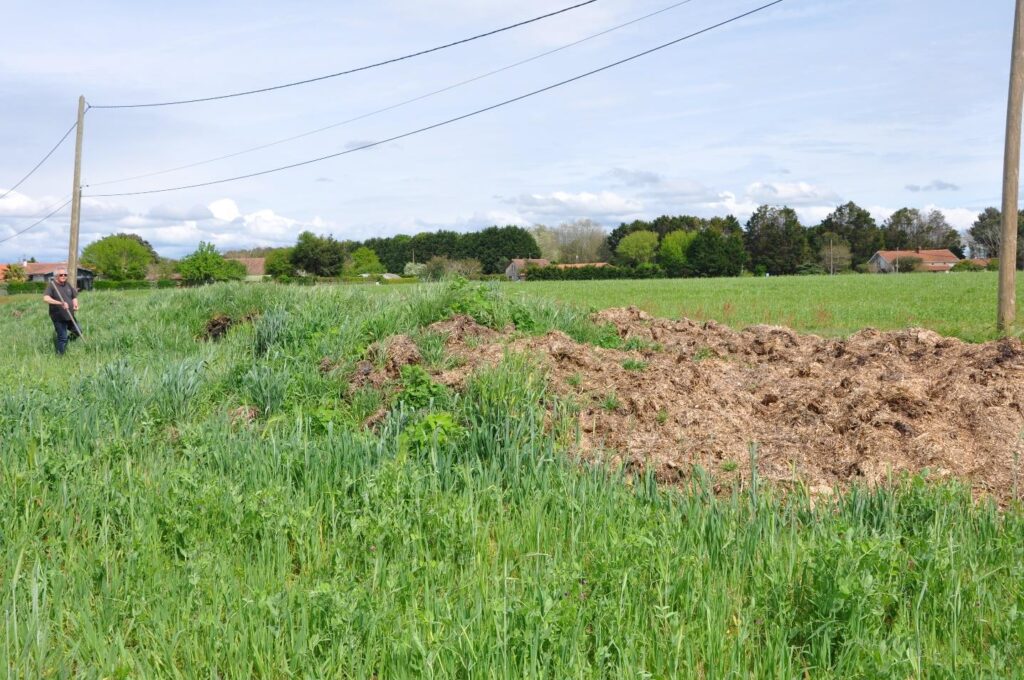
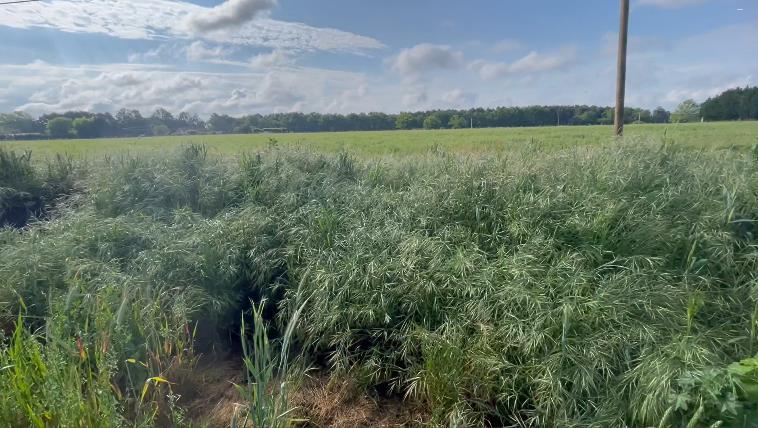

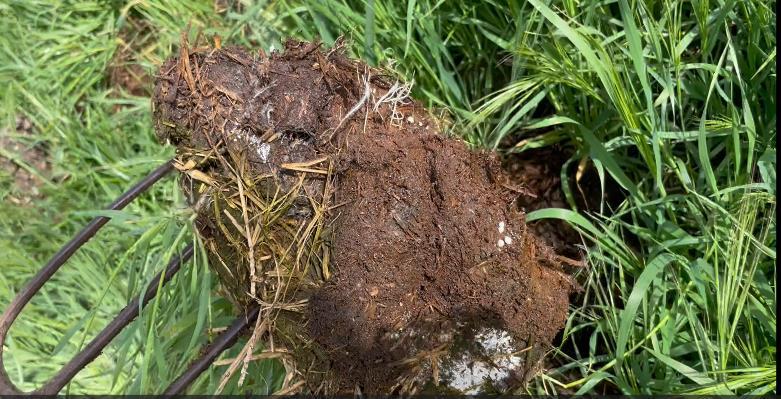
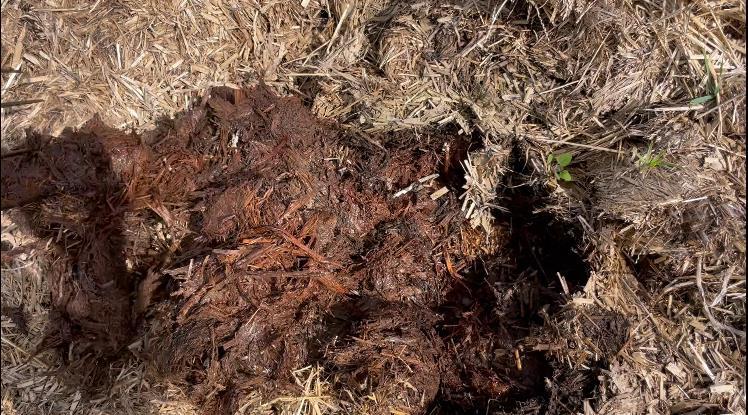
- Treated windrow: spontaneous growth of brome grass, no putrefaction odor, and development of mycelium.
- Untreated windrow: strong ammonia smell, presence of midges, and spontaneous growth of goosefoot (Chenopodium).
Explanations
Organic matter (plant compost, slurry, manure, etc.) evolves either by aerobic composting, putrefaction, or fermentation, depending on:
- the type of biological life (aerobic or anaerobic bacteria such as lactic ferments),
- the environment in which this life develops (pH, molecular oxygen availability).
Composting
Composting promotes the multiplication of aerobic bacteria in a sugar-rich (cellulose) and oxygenated medium. Their respiration (CO₂ release) causes a 50% carbon loss. The process is time- and energy-consuming because it requires turning to oxygenate the pile.
Putrefaction
When aerobic bacteria develop in an anaerobic environment, deprived of atmospheric oxygen, they consume oxygen from molecules that contain it, leading to putrefaction through transformation of:
- nitrates and nitrogen compounds (proteins, amino acids) → ammonia (NH₃),
- sulfates → hydrogen sulfide (H₂S),
- sugars → methane (CH₄).
This state favors pathogenic bacteria, harmful to soil and crop development.
Fermentation
The SW Compost and Bedding stimulate lactic bacteria responsible for fermentation in an anaerobic, acidic environment.
These lactic bacteria:
- reorganize organic matter mainly into amino acids (organic nitrogen),
- cause limited carbon loss,
- produce little heat,
- partially pre-digest cellulose,
- preserve dry matter rich in amino acids,
- limit pathogenic bacteria development,
- promote endomycorrhizae formation.
The manure becomes a high-quality amendment rich in free amino acids, beneficial for soil and plants.
Why Brome on One Side and Goosefoot on the Other?
The reorganization of organic matter in the treated windrow created manure low in mineral nitrogen thanks to fermentation. The untreated windrow, rich in soluble mineral nitrogen, favored goosefoot growth—common on nitrogen-rich soils.
Additional observations:
Farmers using SW Compost and Bedding observe fewer weeds in their meadows and better forage quality, leading to higher milk production and fewer health issues (less mastitis, cell count, lameness).
This is because treated manure contains organic nitrogen (amino acids), non-oxidative for the rumen, unlike mineral nitrogen that causes oxidative stress and digestive problems.
Another Example (2021)
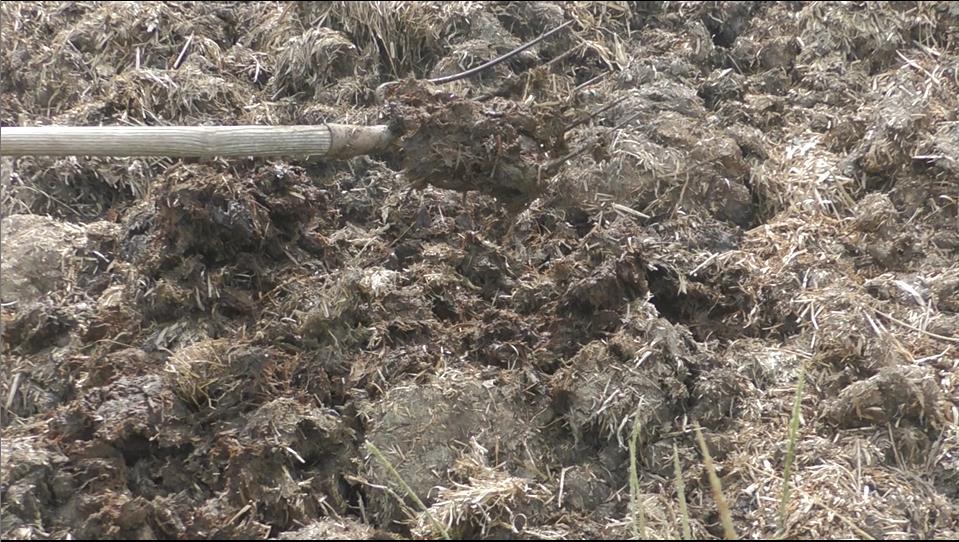
Treated manure: no ammonia odor, humus smell, no heating.
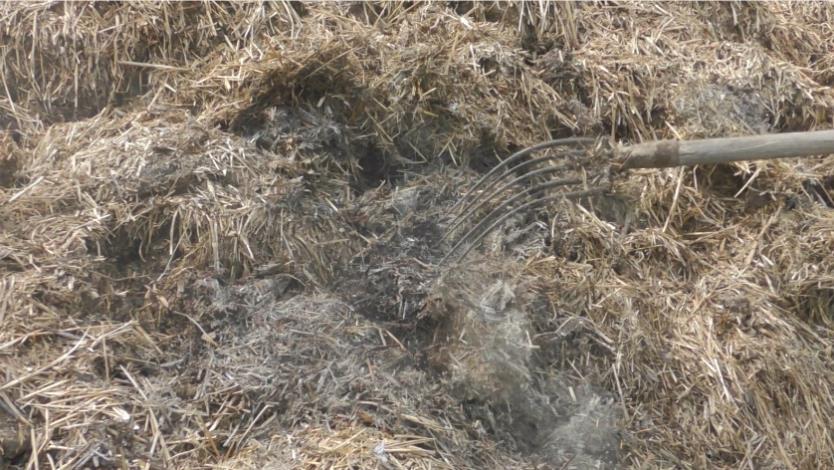
Untreated manure: ammonia odor, heat, fumes, white mold.
Conclusion:
These tests show that organic matter evolution depends on the orientation of biological life. Fermentation provides the most beneficial effects for soil, plants, and animals.