

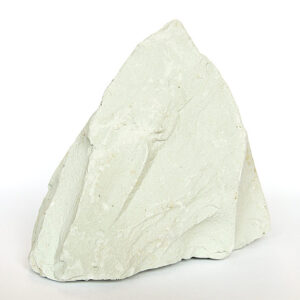
Structure
The structure of clinoptilolite consists of three-dimensional grid which consists of Silicate tetrahedrite SiO44- each interconnected via oxygen atoms; the atoms of silicon is replaced by aluminum AlO45- way, creating a characteristic spatial structure with a significant incidence of cavities, interconnected by channels, in which metal cations, or water molecules are stored. The total volume of these cavities is 24 to 32 %.
Applications
Clinoptilolite is widely used in agriculture, livestock farming, environmental protection, cleaning water.
Mechanism of effect
Reversible hydration and dehydration
During drying it comes to the removal of free and bound water from the crystal grid, which is then counterbalanced back in contact with materials such as stored grain and feed, pet litter, in flue gas to prevent condensation and the like. Clinoptilolite stabilize moisture at a low dose of volume and avoid the adverse effects of water.
Ion exchange
Grid structure allows clinoptilolite to operate as Ion exchanger and as a selective adsorbent. Adsorption and exchange of ions depends on their charge and size. The more the size of the ion matches the size of the entering grid of clinoptilolite, the easier it will be captured and kept. Entry pore diameter is approximately 4 angstrom, which corresponds to the average ammonium ions NH4+, H2O, 134Cs and 137Cs. These compounds exhibit the greatest affinity to bind to clinoptilolite, which operates as a selective adsorbent for a wide range of pollutants.
Adsorption
Clinoptilolite adsorbs: ammonia, heavy metals, radionuclides, odor gases, water.
Available fractions
- Micro 20
- Micro 50
- Micro 200
- 0 – 0,2
- 0 – 1
- 0,2 – 0,5
- 0,2 – 1
- 0,5 – 1
- 0,6 – 1,8
- 1 – 2,5
- 1 – 5
- 2,5 – 5
- 4 – 8
- 8 – 16
- 16 – 32
Reviews
There are no reviews yet.